E-commerce · Mobile App · Self-Initiated Practice · Product Design
Prime Vault Mobile App
View Post on LinkedInExploring how a multi-store shopping experience could make product discovery, comparison, and checkout feel more connected.
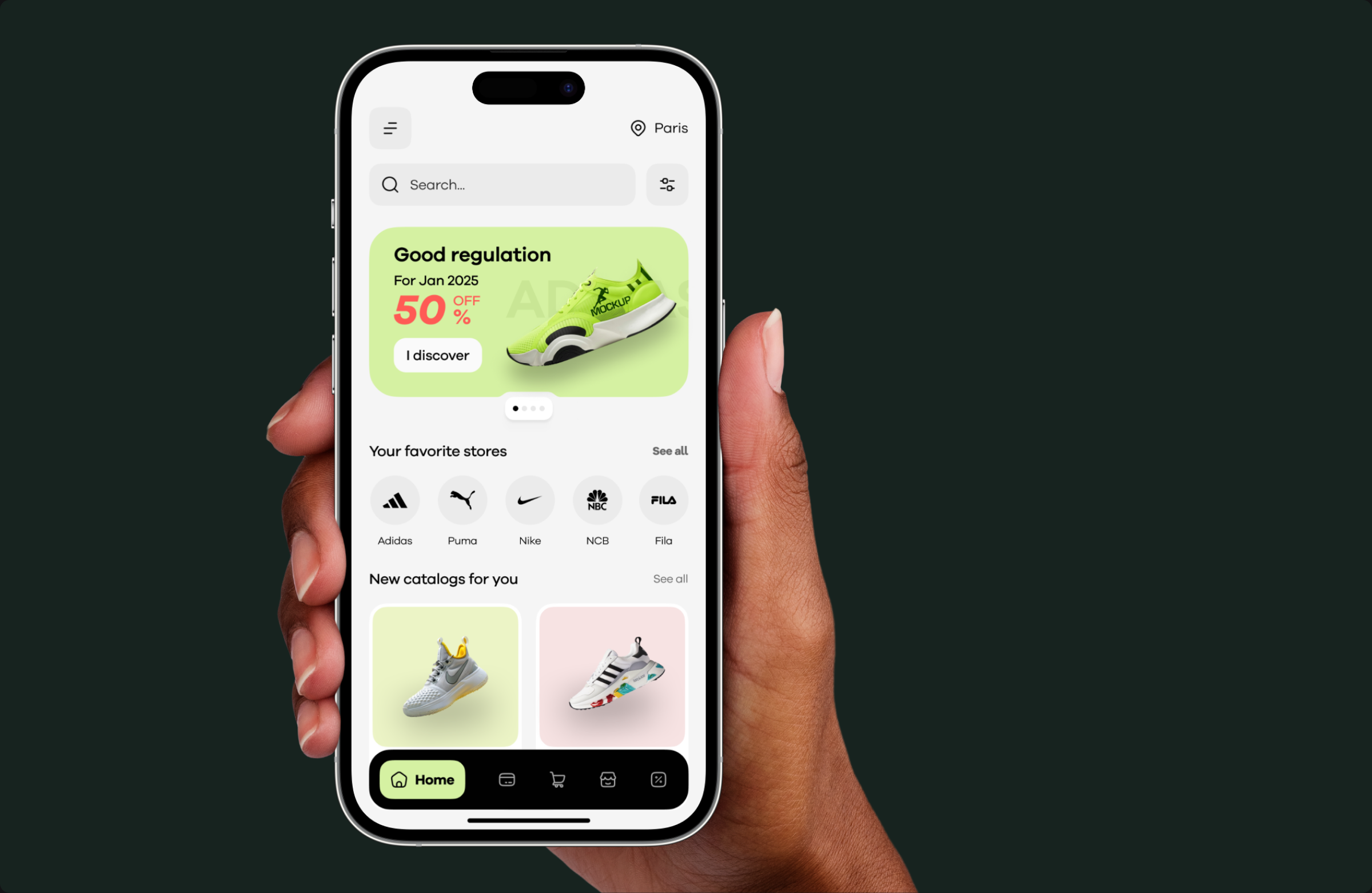
- Role
- Product Designer
- Platform
- Corporate mobile app
- Industry
- Shopping
The problem
Shopping across multiple stores often means moving between different websites or apps, repeating searches, and managing separate shopping experiences.
For this concept, I explored a simple question:
How might I make discovering products from multiple stores feel like one connected shopping experience?
The challenge was to bring store discovery, product discovery, saved payment methods, and purchasing into a single mobile experience without making the app feel like another complicated marketplace.
Thinking
I started by looking at the shopping journey as a series of decisions rather than screens:
Discover → Search → Compare → Save/Select → Manage items → Purchase
This led me to focus on three things:
Discovery, helping users find stores and products quickly.
Convenience, reducing the need to repeatedly search across different stores.
Control, giving users visibility over their cards, shopping list, quantities, discounts, and final purchase.
The design therefore isn't centred around simply displaying products. It's about reducing the effort required to move from discovery to purchase.
The Business
As a self-initiated project, Prime Vault didn't have a real client, commercial target, or validated business model.
I therefore treated the exercise as a hypothetical multi-store commerce platform.
From a business perspective, the product needs to encourage users to:
Discover stores → Explore catalogues → Add products → Complete purchases
That means the experience needs to balance two objectives:
Help users find what they want quickly while creating enough visibility around stores, products, and purchasing to build confidence.
This thinking influenced the emphasis on store discovery, popular searches, product catalogues, saved cards, and a persistent shopping list.
The Users
I designed around a mobile-first shopper who regularly discovers products online and values convenience when comparing different stores.
What they're trying to accomplish
- Find products without visiting multiple stores individually
- Discover new stores and catalogues
- Quickly return to favourite stores
- Search using familiar product terms
- Keep track of items before purchasing
- Complete checkout without unnecessary friction
Key user need
“Help me find what I'm looking for without making me repeat the same shopping process across different stores.”
This became the foundation for the discovery and navigation experience.
Experience
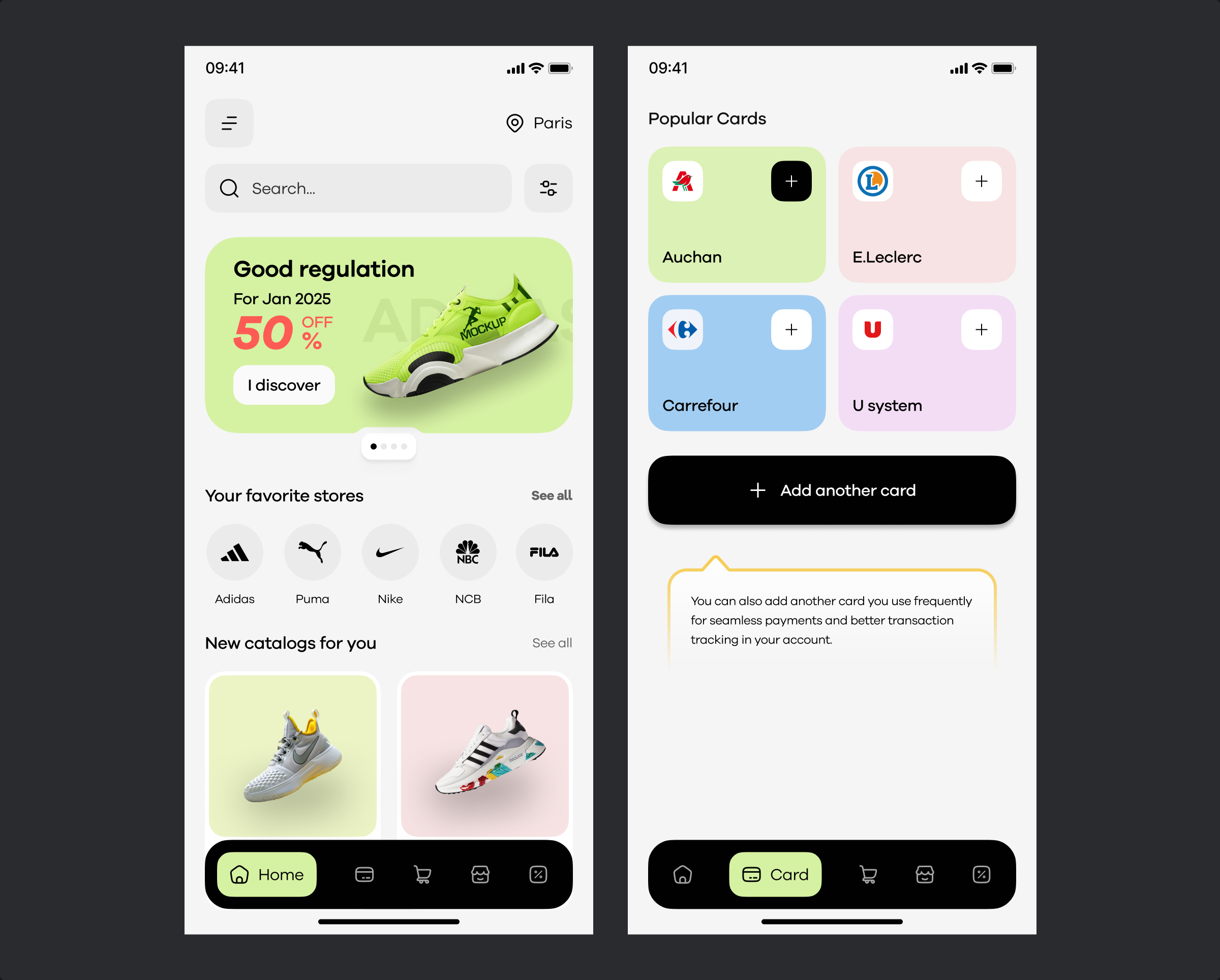
The final concept connects the shopping journey into a single mobile experience:
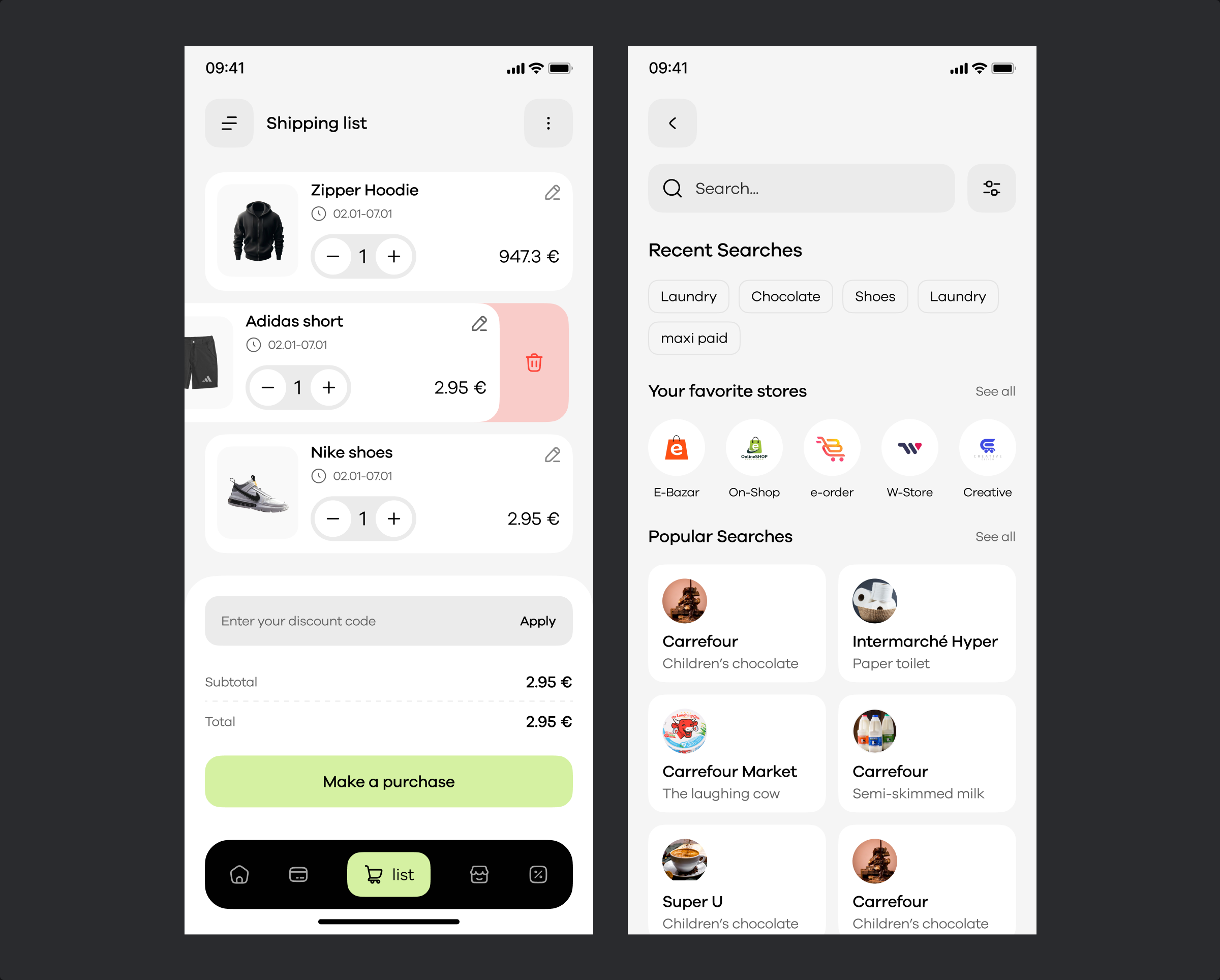
Discover stores → Explore catalogues → Search products → Manage shopping list → Select payment method → Purchase
The navigation keeps the main shopping areas consistently accessible, while the interface uses contextual shortcuts such as favourite stores, recent searches, and saved cards to reduce repetitive actions.
The result is a shopping experience built around discovery, continuity, and convenience rather than simply displaying a catalogue of products.
The Constraints
Since Prime Vault was a self-initiated practice project, there were no real engineering, business, regulatory, or stakeholder constraints.
Instead, I created my own product-design constraints:
Mobile-first
The entire experience needed to work within a limited viewport.
Multi-store complexity
Different stores and catalogues needed to coexist without making the interface feel fragmented.
Fast discovery
Users should be able to move between search, favourite stores, categories, and catalogues quickly.
Simple checkout
The purchasing experience needed to show enough information to help users verify their order without creating unnecessary steps.
These constraints helped me make deliberate decisions around hierarchy, navigation, and information density.
Outcome
Prime Vault was a self-initiated practice project, so it was not launched and does not have real-world conversion, retention, or revenue metrics.
The outcome was a complete mobile commerce concept that allowed me to explore:
- Multi-store information architecture
- Mobile commerce discovery
- Search behaviour
- Store and catalogue hierarchy
- Saved payment experiences
- Shopping-list management
- Checkout information hierarchy
- Persistent mobile navigation
More importantly, the project gave me an opportunity to think through how multiple shopping contexts can exist within one coherent product experience.
NEXT PROJECT
Girostack Landing Page →