Beauty & Wellness · Marketplace · Product Design
Maintena
Designing a seamless beauty and wellness marketplace that connects customers with trusted service providers while giving businesses the tools to manage their operations.
- Role
- Product Designer
- Timeline
- 4 weeks
- Platform
- Mobile App · Vendor Dashboard
- Team
- Cross-functional Product team
- Industry
- Beauty · Wellness · Marketplace
Overview
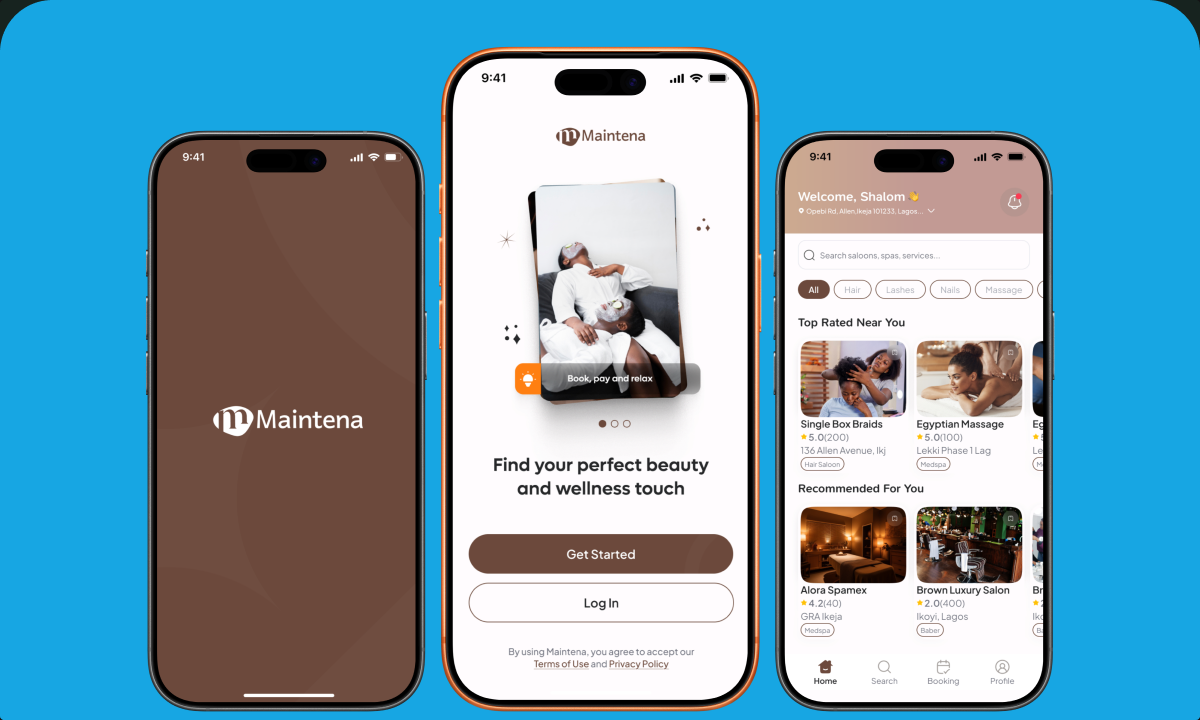
Maintena is a beauty and wellness booking platform that helps customers discover and book services from salons, spas, barbers and other beauty professionals.
Beyond the customer experience, the product also provides service providers with tools to manage their services, availability, bookings, payments and business performance.
The goal was to create one connected ecosystem where discovering a service feels effortless for customers while running the operational side remains manageable for vendors.
The problem
Booking beauty and wellness services can still be unnecessarily fragmented.
Customers often rely on social media, phone calls or direct messages to discover businesses, ask about pricing, confirm availability and schedule appointments.
For service providers, the same process creates another problem, bookings, availability, payments and customer information can become scattered across different channels. The challenge was therefore bigger than designing a booking app.
Maintena needed to create a system that worked for both sides of the marketplace:
Customers needed a simple way to discover → evaluate → book → pay, while vendors needed an efficient way to manage → fulfil → track → grow.
The Solution
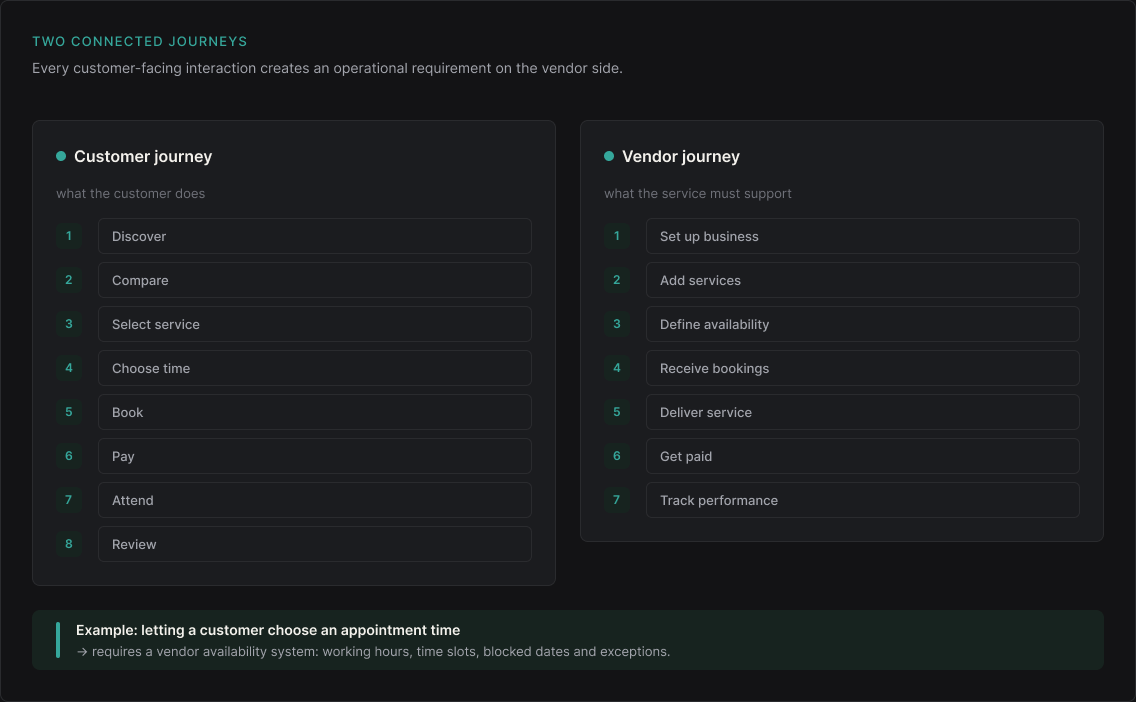
I started by breaking the platform into two connected journeys.
Customer journey
Discover → Compare → Select service → Choose time → Book → Pay → Attend → Review
Vendor journey
Set up business → Add services → Define availability → Receive bookings → Deliver service → Get paid → Track performance
Mapping both journeys helped reveal an important product principle:
Every customer-facing interaction creates an operational requirement for the vendor.
For example, allowing a customer to select an appointment time meant the vendor experience needed a reliable availability system capable of managing working hours, time slots, blocked dates and exceptions.
This became an important foundation for how the product was structured.
User Persona
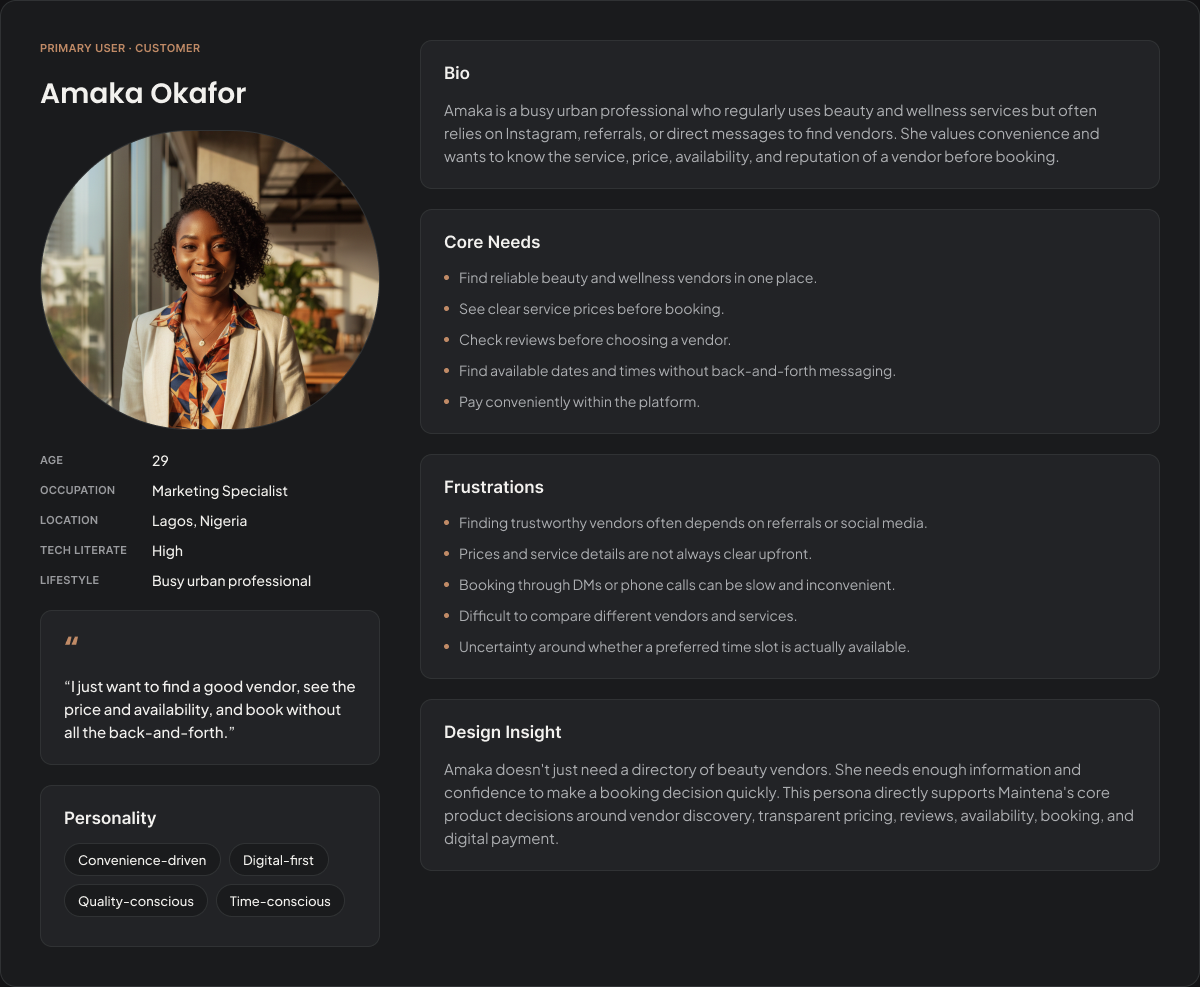
I built this persona to ground Maintena's product decisions in how real customers actually discover and book beauty and wellness services today.
Key product decisions
01
Designed discovery around decision-making
Finding a beauty service isn't only about searching for a business name.
Customers consider the service offered, location, price, availability, business quality and previous experiences before deciding where to book.
I structured discovery around these decision points, allowing users to browse categories, search for services, apply relevant filters and evaluate vendors before entering the booking flow.
This helped turn the homepage from a simple directory into the beginning of the booking journey.
02
Made vendor profiles do the selling
The vendor profile was designed as more than a business information page.
It brings together the key information customers need to confidently make a booking, services, pricing, business information, availability, imagery and reviews.
By keeping those decision-making signals within one experience, users can evaluate a provider without constantly navigating between different screens.
03
Designed availability as a system, not a calendar
Scheduling became one of the most important operational problems within the product.
A simple calendar wouldn't be enough for vendors whose working schedules could change from week to week.
I designed availability management to support weekly schedules, time slots, special dates, blocked dates and recurring availability, giving businesses greater control over when customers could make appointments.
This also helped prevent the customer booking experience from exposing time slots that vendors couldn't fulfil.
Booking experience
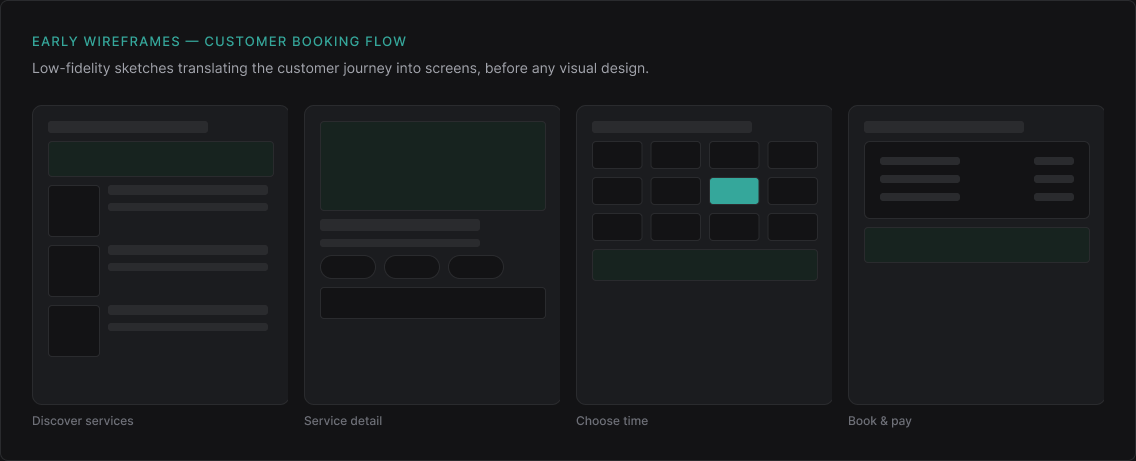
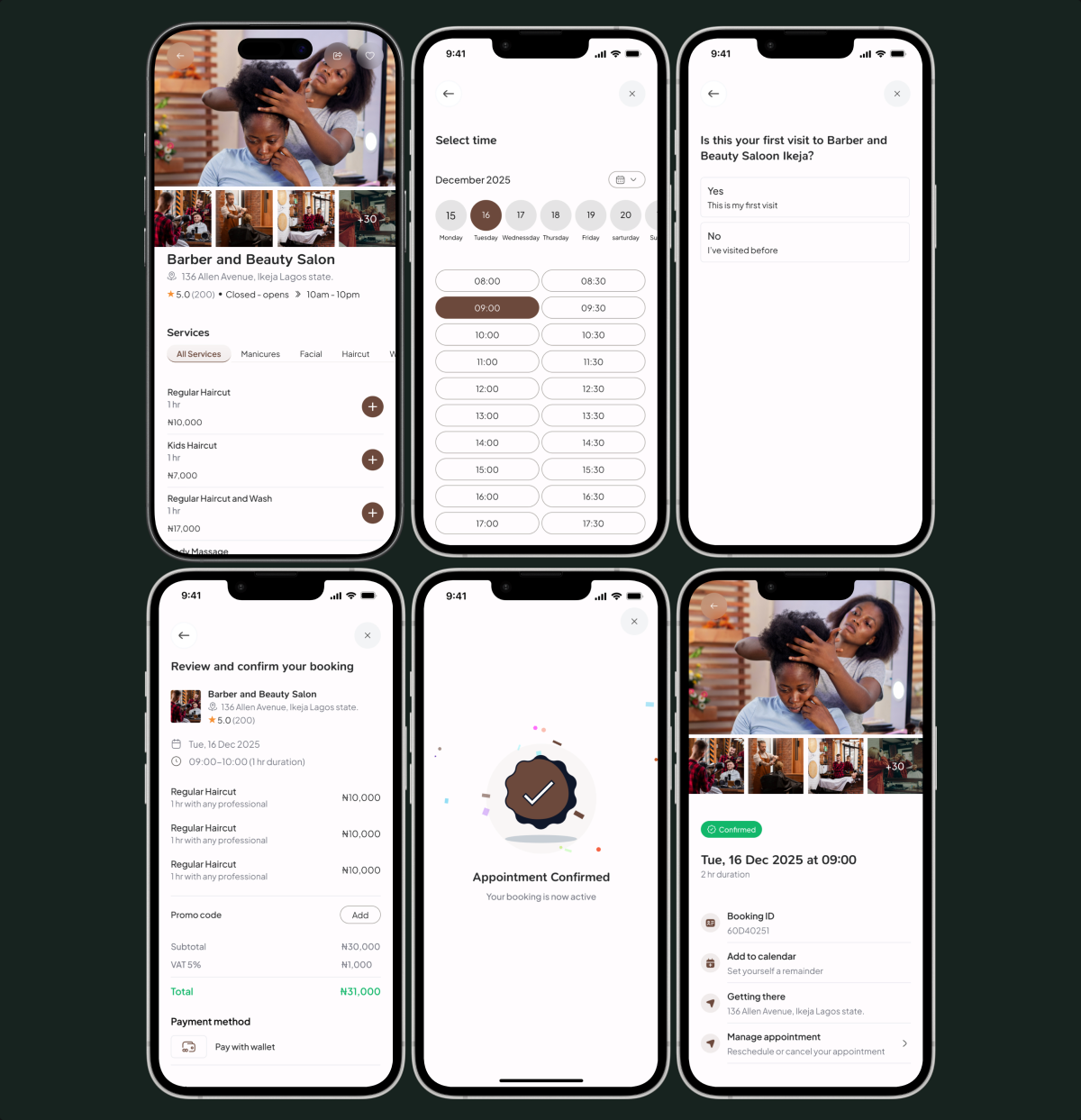
The booking flow was intentionally structured to ask users for information progressively rather than presenting every decision at once.
Customers move from:
Service → Date → Available time → Booking summary → Payment → Confirmation
Each step reinforces the previous selection so users remain aware of what they're booking before committing to payment.
I also considered exception states, such as insufficient wallet balance, ensuring that errors didn't simply interrupt the journey but provided users with an understandable next action.
Payments & wallet
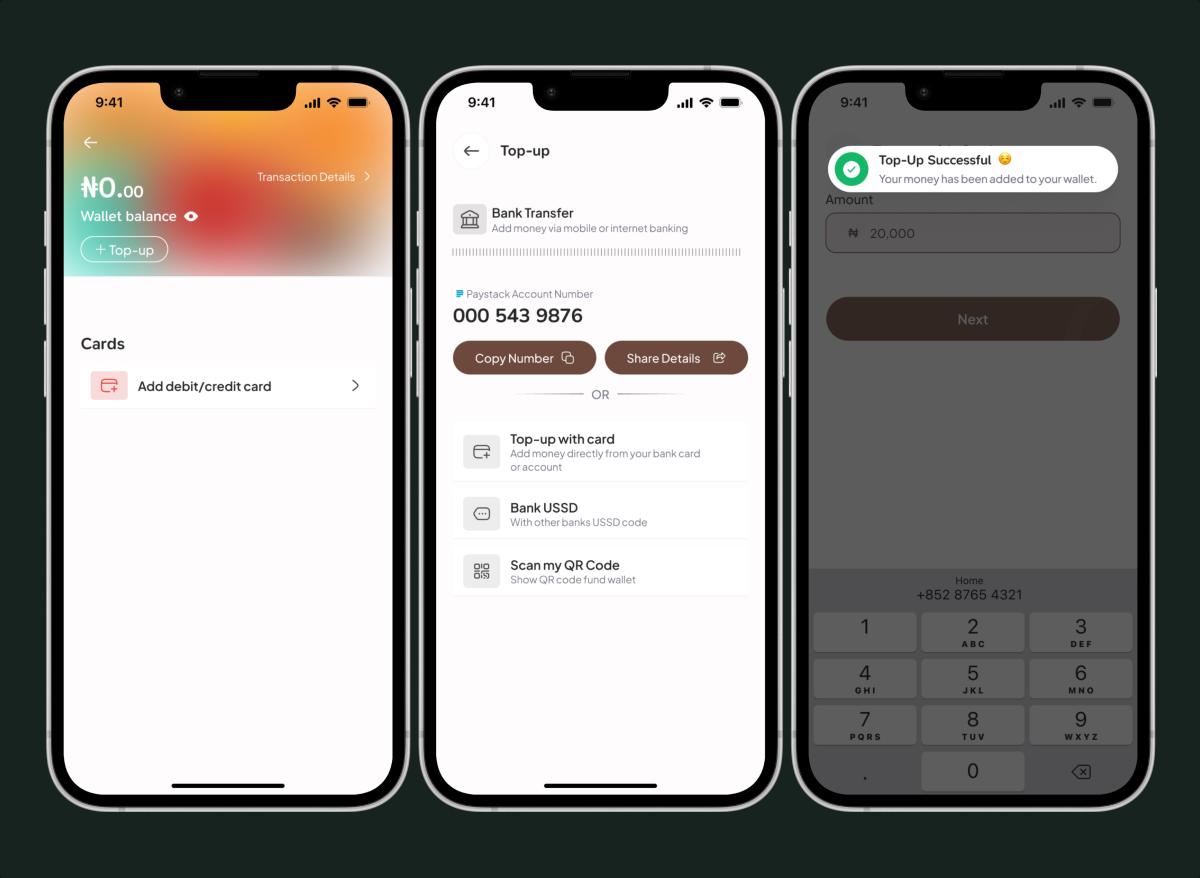
Payments were designed as part of the service experience rather than a separate financial feature.
Customers can use their wallet to pay for bookings, view transaction details and understand the status of their payments.
For vendors, the financial experience focuses on the opposite side of the transaction, earnings, wallet balance, transaction history, withdrawals and payouts. Designing both perspectives helped create a clearer relationship between customer payments and vendor earnings within the ecosystem.
Vendor dashboard
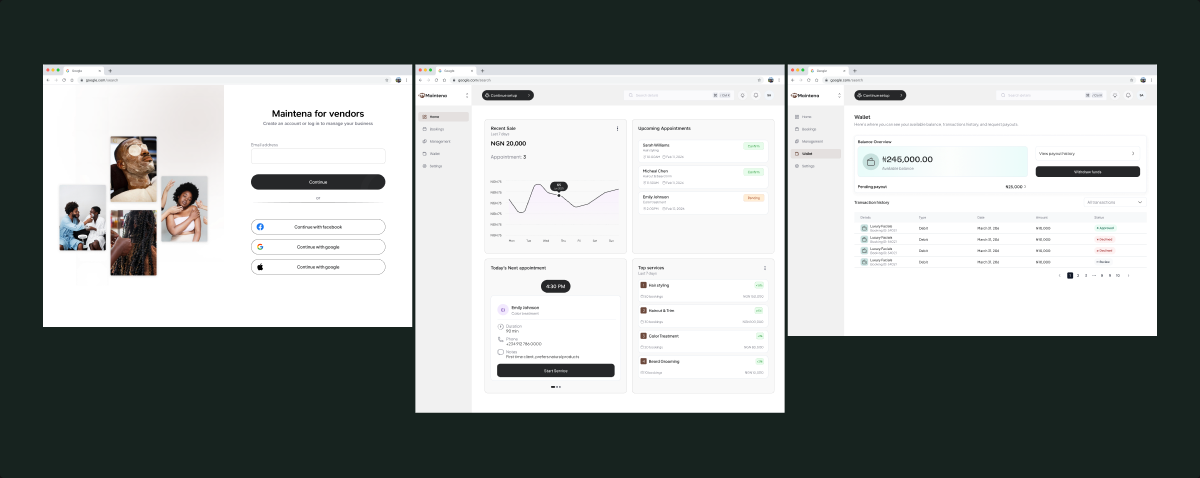
While the mobile application prioritises discovery and convenience, the vendor dashboard is designed around control and operational visibility. Vendors can manage:
- Services and pricing
- Business availability
- Appointment schedules
- Wallet and withdrawals
- Transaction history
- Business analytics
- Account and business settings
The objective was to keep routine business tasks accessible without turning the dashboard into an overly complicated management system.
Final experience
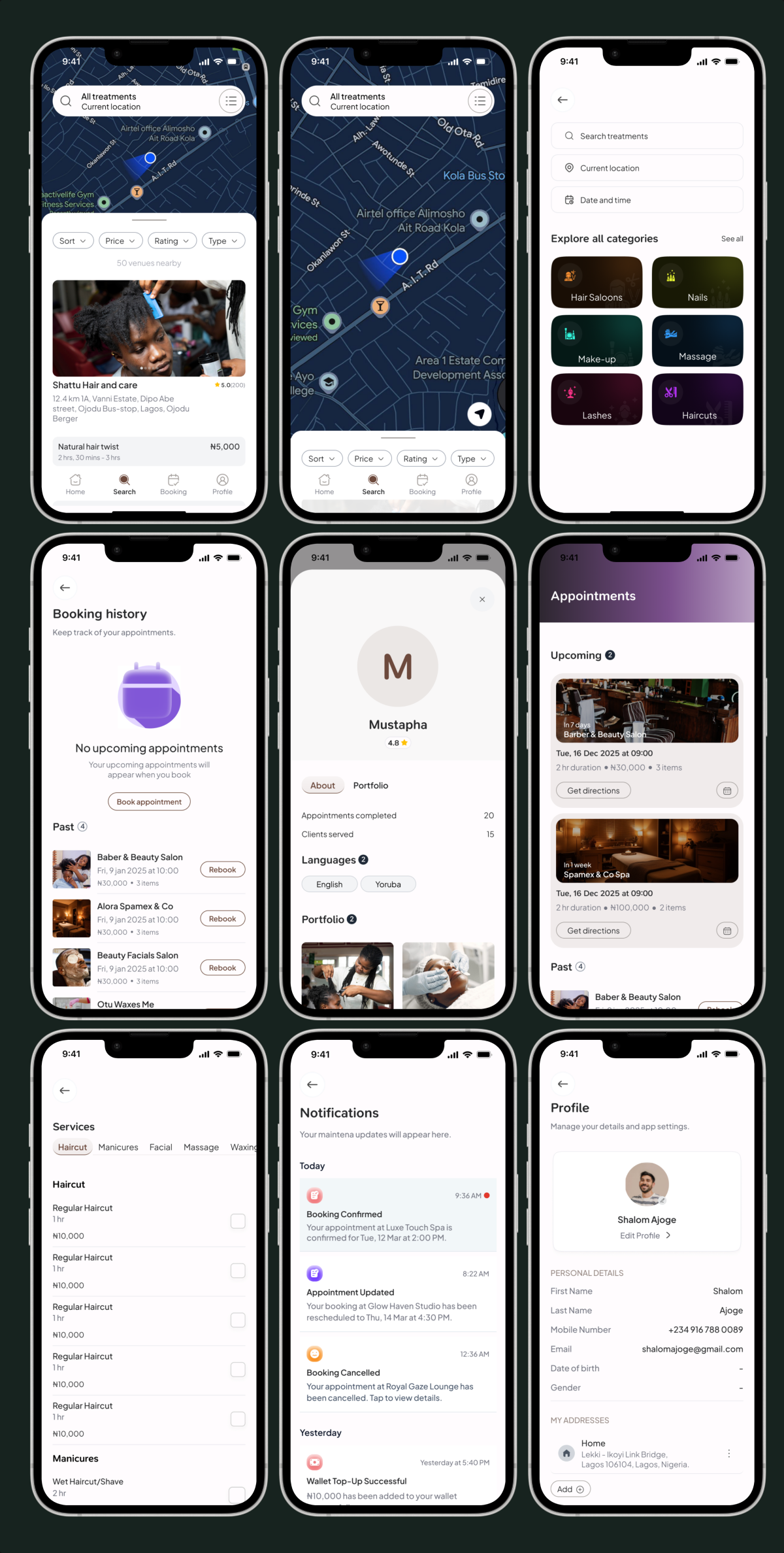
The final Maintena experience connects the customer and vendor journeys into one coherent service ecosystem.
Customers can discover providers, evaluate services, find available appointments, complete bookings and manage their activity from one place.
At the same time, businesses have the operational tools required to control what customers see, define when they are available, manage services and track the financial side of their business.
Rather than designing two independent products, the experience was built around the relationship between them.
Customer intent creates vendor activity, and vendor configuration shapes the customer experience.
Design system
With both customer and vendor experiences sharing the same ecosystem, consistency became especially important.
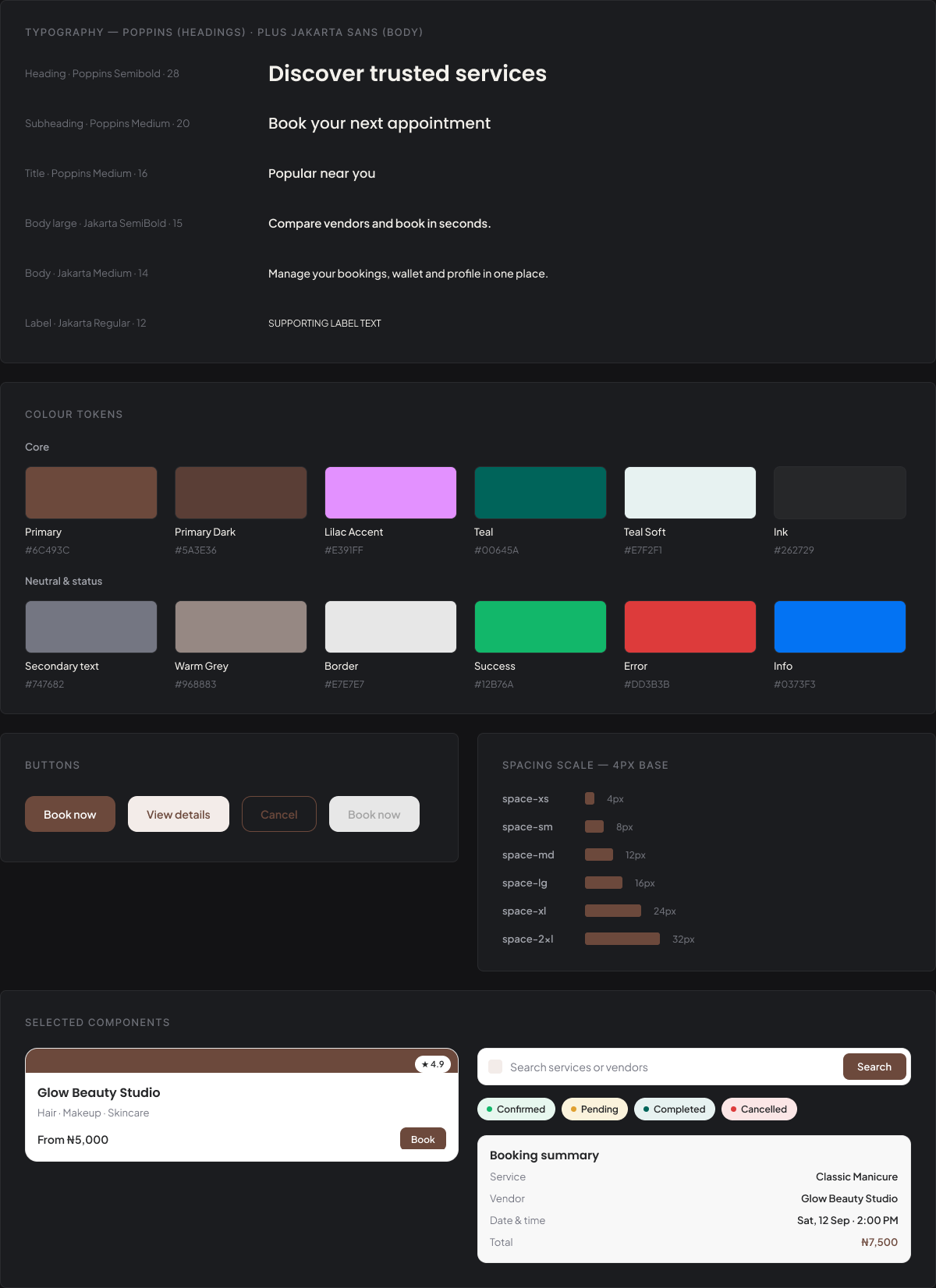
I established reusable patterns for typography, spacing, buttons, form controls, cards, navigation, status indicators, modals and feedback states.
The system created a consistent product language while still allowing the customer application to feel more discovery-oriented and the vendor dashboard to feel more operational.
NEXT PROJECT
Tango Corporate App →